
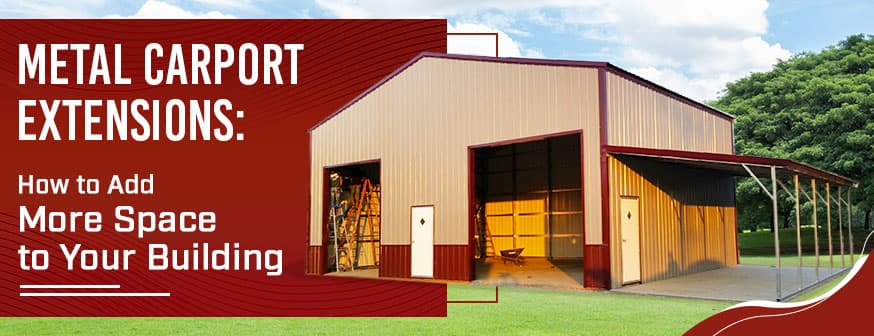
- Quick Answer: Can You Extend a Metal Carport?
- Metal Carport Extensions
- Metal Carport Extension Kit: What to Check Before You Buy Anything
- Carport Post Extenders (and Carport Extension Legs): When It’s Smart vs Risky
- How to Extend and Expand Your Carport
- 1. Extending Length
- a) Remove Roof and Side Paneling
- b) Extend Your Concrete Slab
- c) Secure New Struts
- d) Reinstall Sheeting
- 2. Extending Height
- 3. Install Lean-tos and Extend Width
- Carport Roof Extension vs Lean-To: Which Adds Space Better?
- Carport Addition Ideas (Real Uses That People Actually Build)
- Important Things to Consider Before Extending Your Carport
- 1. Permits and Zoning Laws
- 2. Purpose
- 3. Cost
- 4. Location
- 5. Foundation
- 6. Additional Custom Options
- Get Carports Can Help You Get the Real Protection
- Frequently Asked Questions
- Can you extend a metal carport with an extension kit?
- How do I extend a carport for an RV?
- Are carport post extenders safe?
- What’s the easiest way to add width – roof extension or lean-to?
- Do I need a permit to extend my carport?
- What’s the best foundation if I’m extending the footprint?
Quick Answer: Can You Extend a Metal Carport?
Yes – most metal carports can be expanded, but the “best” option depends on what you’re adding:
-
Need more length? You can extend the structure by adding additional framing bays (often easiest when the design is modular).
-
Need more height? This is where carport post extenders / carport extension legs come into play—but height changes can affect stability, anchoring, and wind performance.
-
Need more width? A lean-to is often the simplest way to add covered space without rebuilding the whole frame.
If you’re not sure what’s compatible with your current setup, Get Carports can help you plan a solution that matches your site, intended use, and local requirements.
Metal Carport Extensions
Steel carports have long been a mainstay for homeowners looking for a strong, cost-effective way to protect their vehicles from the elements. These buildings are crafted from high-grade steel and engineered to last for decades with minimal need for repair.
But what truly sets these buildings apart from wooden or concrete alternatives is their expandability. Metal carports can easily be extended and upgraded to make more room should your storage needs making it simple and affordable to grow your infrastructure with your environment.
In this blog, we’ll explore how to expand your metal carport and add space to your current structure without breaking the bank in the process. Stick around for more information on metal building extensions.
Metal Carport Extension Kit: What to Check Before You Buy Anything
Before you buy an extension kit (or try to piece one together), confirm these details first:
-
Your carport’s roof style
Matching the roof style matters for water flow and panel fit. Get Carports offers regular, A-frame horizontal, and vertical roof styles—each behaves differently in rain/snow. -
Frame size + steel gauge
Many carports use standard tube sizing, but thickness and framing specs can vary. Get Carports notes common gauge options (like 14-gauge and 12-gauge) and that requirements can vary by area. -
Leg spacing / “centers”
If your current structure is built on certain spacing, the extension should follow that rhythm. Spacing can vary by location and snow requirements. -
Anchoring + foundation type
Are you on concrete, gravel, asphalt, or ground? If you extend the footprint, you may need to extend the foundation too. Your site prep should be done before installation—Get Carports outlines this clearly. -
What you’re extending: length vs roof coverage vs usable bay space
A “roof extension” isn’t always the same as adding usable bay length. Decide what you actually need: parking space, dry storage, or extra clearance.
Pro tip: If you have a boxed-store kit (including some brand-name kits), it’s worth verifying manufacturer compatibility before mixing parts. If that’s a headache, many owners choose a new matching section (or a lean-to) designed to fit from the start.
Carport Post Extenders (and Carport Extension Legs): When It’s Smart vs Risky
Raising a carport can be the right move for:
-
Taller trucks
-
RV clearance
-
Tractors/equipment
But height changes aren’t “just add a piece of pipe.” You’ll want to confirm:
-
Tube compatibility: Post extenders must match your leg size and connection style.
-
Bracing needs: Taller structures often need additional bracing to stay rigid.
-
Anchoring: Taller + wider roofs can increase uplift forces, so anchoring matters even more.
-
Local requirements: Some areas treat this as a structural modification that may require permits.
If you’re unsure, it’s safer to talk with a building specialist and plan a clean solution (especially if you’re near high-wind areas).
How to Extend and Expand Your Carport
As your needs evolve over time, you might find yourself in a situation where you need to expand your existing metal carport. Fortunately, metal carports are designed with flexibility in mind, allowing for various expansion options. In this guide, we’ll explore three effective methods for expanding your metal carport: extending length, increasing height, and installing a lean-to to extend the width.
1. Extending Length
Expanding the length of your metal carport involves a series of steps to ensure structural integrity and seamless integration with the existing structure. Here’s a breakdown of the process:
a) Remove Roof and Side Paneling
Begin by carefully removing your existing metal carport’s roof panels and side paneling. This step requires caution to prevent damage to the original structure and to ensure your safety.
b) Extend Your Concrete Slab
Extending the concrete slab is crucial to provide a stable foundation for the expanded carport. This involves excavating the area, pouring new concrete, and allowing it to cure properly.
c) Secure New Struts
To support the extended length, new struts or support beams will need to be securely anchored to the existing structure and the new concrete slab. Proper placement and anchoring are essential to maintain structural integrity.
d) Reinstall Sheeting
Once the new struts are in place, reinstall the roof and side sheeting. Ensure a watertight seal between the existing and new sheeting to prevent leaks and maintain the durability of your metal carport.
2. Extending Height
Expanding the height of your metal carport can provide the clearance needed for larger vehicles or equipment, and make general access to your things easier. For this, you’ll have to carefully disassemble the roof and side panels and begin expanding from there.
3. Install Lean-tos and Extend Width
In most cases, the easiest way to expand the width of your structure is with the use of carports with lean-to. These mono-sloped extensions connect to the side of your structure and can provide you with the additional storage room you need.
Carport Roof Extension vs Lean-To: Which Adds Space Better?
Roof extension is usually about adding coverage at an edge.
A lean-to is usually about adding usable covered space along a side.
Choose a lean-to when:
-
You want more parking/storage width
-
You want a dedicated side bay (tools, mower, ATV, firewood)
-
You want a straightforward expansion option without rebuilding the main roof
If you’re considering a lean-to DIY build, link this post to your existing guide: “DIYing a Lean-to Carport: A How-to.”
Carport Addition Ideas (Real Uses That People Actually Build)
(Search intent match: carport addition ideas, carport extension ideas)
Here are practical add-on ideas that usually make the biggest difference:
-
A lean-to bay for lawn equipment, trailer storage, or a small workshop zone
-
Partial side panels on the weather side to block wind-driven rain
-
Extra height + gable ends for RV storage and better airflow
-
Carport-to-garage upgrade path if you eventually want fully enclosed storage (doors, walls, and security)
(If you think you’ll want full enclosure soon, you may be better served jumping straight to a metal garage or enclosed building.)
Important Things to Consider Before Extending Your Carport
From legal requirements to design aspects, each consideration plays a vital role in ensuring a successful and satisfying carport extension. Let’s delve into these factors:
1. Permits and Zoning Laws
Before you begin any carport extension project, it’s imperative to research and understand the local permits and zoning laws that govern property modifications. Depending on your area, you may need to obtain permits for structural changes, especially if the extension alters the size or appearance of your property. Complying with these regulations not only helps you avoid legal issues but also ensures your new carport extension is safe and up to code.
2. Purpose
Clearly define the purpose of your carport extension. Are you looking to accommodate larger vehicles, create additional storage space, or establish a covered outdoor area? Understanding the intended use of your extended space will guide your design decisions and help you make the most of the new area.
3. Cost
Metal building extensions, especially those involving metal building components and carports with lean-to, come with associated costs. Consider the expenses, such as materials, labor, permits, and any additional features you plan to include, such as flooring or customized elements. Developing a budget upfront will prevent financial surprises and allow you to plan accordingly.
4. Location
Carefully choose the location for your carport extension. Consider sun exposure, wind direction, and proximity to your home or other structures. The new extension should complement the existing layout and flow seamlessly within your property’s design.
5. Foundation
A solid foundation is essential for the stability and longevity of your carport extension. Depending on the local soil conditions and the weight of the extended structure, you may need to modify or reinforce the foundation to ensure it can support the additional load. Consult with experts to determine the most suitable foundation type for your project.
6. Additional Custom Options
When extending your carport, you can add custom features such as upgraded roofing options, enclosures, paneling upgrades, doors, windows, and aesthetic customizations to make your structure stand out from the crowd.
Get Carports Can Help You Get the Real Protection
Whether you’re housing the family vehicles or extending the life of your RV, Get Carports is proud to be your one-stop metal carports solution. We craft steel carports that are built to perform and designed to last a lifetime.
So, if you’re looking to buy a steel carport or extend your current structure, Get Carports is ready to help lead the way. Our structures are engineered for strength, and ready to tackle any job you have in mind.
Give us a call today at (866) 681 7846 and let our team of talented building experts help you find the storage solution you need. From top to bottom, we’ll help you customize a structure that’s perfectly suited for your next adventure. Get Carports and get real protection that lasts.
Frequently Asked Questions
Can you extend a metal carport with an extension kit?
Sometimes, yes—but it depends on who built your carport and how it was engineered. Many “extension kits” only work when the new parts match your existing roof style, frame size, leg spacing (centers), and panel profile. If those don’t match, you can end up with leaks, weak connections, or a structure that won’t meet local requirements. A safer approach is to have a building specialist quote a matching add-on section (or redesign the carport to the final size you really need).
How do I extend a carport for an RV?
Start with measurements: RV overall length, overall height (including AC units), and the clearance you want for backing in comfortably. In most cases, RV expansions fall into three upgrades:
-
More height for clearance
-
More length for full coverage
-
A wider bay (often by adding a lean-to)
If you’re going long, keep roof style in mind—Get Carports’ building guide notes vertical roofs are recommended for extreme weather and required for structures longer than 36′.
Are carport post extenders safe?
They can be safe only when they’re engineered for your specific frame and installed correctly. Raising the legs changes how the structure handles wind uplift and racking (side-to-side movement), so you may need additional bracing and the right anchors for your foundation. Get Carports also notes that certification requirements vary by location, so structural modifications can affect what your local building department expects. When in doubt, talk to a building specialist or a licensed contractor before altering the frame.
What’s the easiest way to add width – roof extension or lean-to?
For most people, a lean-to is the easiest way to add usable width because it creates a full additional covered bay along the side of the structure. A “roof extension” can add some drip-line coverage, but it often doesn’t give you the same practical parking/storage space a lean-to does. Your current blog already points out that lean-tos are typically the simplest width-expansion method for carports.
Do I need a permit to extend my carport?
In many areas, yes—especially if you’re changing the footprint, height, or anchoring/foundation. Rules vary by city/county and sometimes by HOA, so you should check with your local building department before you build. Get Carports also states that it’s the customer’s responsibility to confirm permits and code requirements for their location.
What’s the best foundation if I’m extending the footprint?
The “best” foundation is the one that stays level, stable, and code-compliant for your soil and weather. Get Carports notes common options including concrete, asphalt, ground, and gravel, and the right choice depends on your area and structure type. If you’re extending the footprint, plan to extend the foundation to match the new layout and use the correct anchor type—Get Carports lists anchors for specific foundation types (concrete, asphalt, mobile home, rebar)