
- Protecting More Than Walls: Why Wainscot Matters
- TL;DR – Wainscot for Metal Buildings (Quick Takeaways)
- The Technical Side: How Wainscot Protects Your Building
- Wainscot vs. No Wainscot: A brief Comparison
- Curb Appeal & Resale Value
- Cost & ROI: Why It’s Worth the Investment
- Choosing the Right Wainscot for Your Building
- Real-Life Use Cases
- FAQs: What Buyers Want to Know
- Why Upgrade Now
- Impact and Damage Resistance
- Weather and Corrosion Protection
- Easy Repairs and Maintenance
- Garages and Workshops
- Barns and Agricultural Buildings
- Commercial Buildings
Protecting More Than Walls: Why Wainscot Matters
When you put up a metal building – garage, barn, shop, or even a bigger commercial place – you expect it to last. Steel is strong, low-maintenance, and built for years of use. That’s the selling point.
But there’s one small detail people often skip over: wainscot. It’s not flashy, but it makes a real difference.
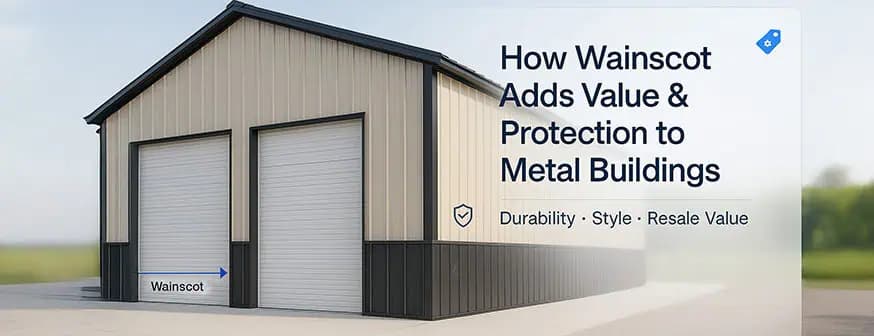
In plain terms, wainscot is a strip of paneling, usually three or four feet tall, that runs along the bottom of the walls. It changes the look of the building, giving it a sharper, more finished style – but it’s not just about looks.
Think about where most of the abuse happens. Lawnmowers throwing rocks. Truck doors swinging open. Mud splashes up. That bottom section of wall takes the beating. With wainscot, that part is reinforced. The panels protect against dents, scratches, and mess, while the upper walls stay cleaner and damage-free.
It’s a simple add-on, but it saves you repairs and keeps the whole building looking better over time.
TL;DR – Wainscot for Metal Buildings (Quick Takeaways)
- Shields the most abused area (bottom 3–4 ft) from dings, scrapes, mud, and mower throw.
- Cuts maintenance costs and downtime; repairs are faster and cheaper.
- Adds weather defense at ground level (splash water, salt, UV), slowing corrosion and fade.
- Supports resale value – signals care and quality to buyers/appraisers.
- Common height: 3–4 ft (go taller for extra protection or a bolder look).
- Great for garages/shops, ag buildings, and commercial fronts where impacts are frequent.
The Technical Side: How Wainscot Protects Your Building
Impact and Damage Resistance
The lower part of a building usually takes the beating. That’s where rocks from the mower hit. Where truck doors scrape. Where the equipment bumps into the wall. Wainscot acts like a buffer. It takes the abuse so the main wall panels don’t. If something gets dented, it’s the wainscot, not the siding that runs the full height of the wall.
Weather and Corrosion Protection
Weather is another factor. Snow piling against the walls, salty coastal air, summer sun fading the paint. That bottom strip of paneling shields against all of it. And if you go with coatings, the panels resist rust, scratches, and UV wear even longer. In tough climates, that extra layer pays for itself.
Easy Repairs and Maintenance
When damage does happen, the repair is simple. Those panels are only a few feet tall, so swapping one out doesn’t mean tearing apart an entire wall. It’s quicker, it costs less, and your building is back to looking right without a major project.
Wainscot vs. No Wainscot: A brief Comparison
When you look at a building with wainscot compared to one without, the differences stand out pretty quickly.
Impact protection is the first. With wainscot, the lower panels take the dents and scratches, and if something does happen, you just replace those few pieces. Without it, any hit goes straight into the full wall panel. Fixing that is more expensive and a bigger job.
On maintenance costs, wainscot usually wins. Since you’re only dealing with the bottom strip, repairs stay simple and cheaper. Without it, a scratch or dent might mean repainting or replacing an entire wall panel, which adds up fast.
Then there’s appearance. Wainscot gives the building more character — you can add color contrast, break up plain walls, and it just looks more finished. Without it, the walls are one flat color with no depth or curb appeal.
For weather protection, that bottom layer shields the base of the building from splash water, road salt, mud, and even sun exposure. Without wainscot, the lower panels take all that abuse directly, which speeds up corrosion and wear.
And finally, long-term value. A building with wainscot tends to look better for longer, which helps property value and cuts down on repair bills. Without it, upkeep costs creep higher over time, and the building doesn’t hold the same appeal.
Curb Appeal & Resale Value
Protection’s a big deal, but let’s be honest—nobody wants a building that just looks like a plain metal box. Wainscot changes that. It gives your place a finished look that stands out, and that’s something people notice the second they pull up.
Visual Contrast – Installing a darker or lighter strip of wainscot along the bottom breaks up those long wall panels. It gives the metal building depth and makes it look designed, not just thrown together.
Material Options – Steel wainscot keeps it simple and modern, while stone or brick veneer instantly makes the building feel higher-end. It’s the same structure underneath, but it looks like a big upgrade.
Perceived Value – Appraisers and buyers see wainscot as a sign the building’s been taken care of. It reads “quality” at a glance. That means better curb appeal today and more resale value down the road.
Cost & ROI: Why It’s Worth the Investment
For all the benefits it brings, wainscot is actually one of the cheapest upgrades you can put on a metal building.
-
Metal wainscot usually runs about $4 – 5 per linear foot for a 3 – 4 ft. strip along the wall. That’s a small price to pay considering how much abuse the bottom of a building takes.
-
Stone or brick veneer gives you a high-end look, but it’s a different ballgame – closer to $90 per foot. Most folks stick with steel, but the stone option is there if you want that “showpiece” finish.
Now compare that to the cost of repainting faded panels or swapping out a full wall panel when it gets dented. That’s hundreds, sometimes thousands, depending on the size of the building. With wainscot, you’re spending a little up front to save a lot later. It’s one of those upgrades that pays for itself in lower repairs and a higher resale value.
Choosing the Right Wainscot for Your Building
Most people start by deciding on the height. Three to four feet is common, since it covers the lower third of the wall and gives plenty of protection where damage usually happens. Some go taller. Sometimes it’s for extra coverage, sometimes just for the look. A higher wainscot can give a heavier, more dramatic appearance.
Then there’s the material . Metal panels are the standard pick. They hold up well, they’re inexpensive, and if something dents them, swapping one out isn’t hard. But not everyone sticks with metal. Some owners want more of an upscale feel, so they’ll go with stone or brick veneer. That changes the appearance completely, but it does come at a higher price.
Color is usually the last decision people make. Some match the wainscot to the wall so it blends in and you barely notice it. Others go the opposite way and pick a color that jumps out. A darker strip under lighter siding can look sharp. Flip it around – light under dark – and it stands out in a different way. Matching looks clean, contrasting looks bold. In the end, it depends on the style you like staring at every day.
Real-Life Use Cases
Garages and Workshops
The lower part of the wall in a garage or shop takes the most punishment. Car doors bump it. Tools get leaned against it. Sometimes heavy equipment brushes by. Wainscot gives that lower section an extra layer, so the damage stops there instead of marking up the whole wall.
Barns and Agricultural Buildings
On farms, the lower walls take hits from machinery and even livestock. Tractors, skid steers, or hay equipment all end up close to the walls, and animals rub or kick against them too. Having wainscot in place keeps the wear and tear down and saves the main siding from getting chewed up.
Commercial Buildings
In commercial spaces, the benefits are a little different. Yes, it still protects the structure, but it also changes the appearance. A building with wainscot looks more finished and more professional. For businesses, that polished look adds to curb appeal and reinforces the brand image.
FAQs: What Buyers Want to Know
Q: Can I add wainscot to an existing building?
Q: How tall should the wainscot be?
Q: Does it help with rust or corrosion?
Q: Can I install it myself?
Why Upgrade Now
Wainscot is a simple add-on, but it makes a difference. It takes the dents, the scratches, the mud — all the stuff that usually beats up the lower walls. With it in place, the siding above stays cleaner and doesn’t wear out as fast. Over time, that means less patchwork, fewer panel replacements, and more money left in your pocket.
If you’re thinking about adding it to a garage, barn, or shop, now’s a good time. Get a free quote or call (866) 681-7846 and see what it costs to add that extra layer of protection to your building.
Call Now
×